
Rajeev Suri ( born 1967) is the chief executive officer of Nokia. Before the current assignment in May 2014, he was the CEO of Nokia Solutions and Networks since 2009 and held various positions in Nokia since 1995. Suri became the CEO of Nokia when the sale of Nokia's phone division to Microsoft Mobile was completed. He has a Bachelor of Engineering from Manipal Institute of Technology and worked for multinational corporations in India and Nigeria, before joining Nokia.
Early life:
Rajeev Suri was born in New Delhi in 1967 to parents Yashpal and Asha. Suri's father was from the Punjab region but in 1958 his parents had moved from India to Kuwait, where his entrepreneur father had a car imports business and where Suri was raised until 1985. He spoke Hindi at home, went to Indian Community School, Kuwait and learned to read and write Arabic.
Suri studied Electronics and Communications Engineering in the Manipal Institute of Technology, India (class of 1989).
Career:
Before joining the Nokia group, Suri had worked for Calcom Electronics and ICL in India as well as for Churchgate Group in Nigeria.
In 1995, Suri joined the Nokia group. Suri was instrumental in driving the Nokia Siemens Networks’ Services business unit's revenue in the company to grow from less than a third to about half.Suri motivated the company to create a new Services hub in India. Before heading Services, Suri headed the Asia Pacific operations from April 2007 until November 2007. From 1995 to March 2007, Suri worked on a number of assignments at Nokia Networks in Business Development, Marketing, Sales, Strategy from India, Finland, the United Kingdom and Singapore.
Suri followed Simon Beresford-Wylie as the CEO of NSN in October 2009 after Nokia Networks and Siemens Networks had been merged. He is considered a 'turnaround specialist' in the global tech circles.
On November 23, 2011, Suri announced that the company planned to eliminate 17,000 jobs by the end of 2013 to enable NSN to refocus on mobile broadband equipment, the fastest-growing segment of the market. The reductions would slash the company’s work force by 23 percent from 74,000. The cuts followed NSN’s $1.2 billion purchase of Motorola’s mobile network equipment business in July 2010, which added staff; and would help the company trim annual operating expenses by $1.35 billion by the end of 2013.
On 29 April 2014, Suri was appointed as the CEO of Nokia. This was after Nokia had bought back full control of NSN and sold Nokia's phone division to Microsoft Mobile.
Suri is one of those rare top corporate executives who have achieved heights without pursuing any MBA/PG degree.
Personal life:
Suri is based in Espoo, Finland, Nokia headquarters. His wife Nina Alag Suri is the founder and CEO of the executive search business Nastrac Group. His younger son Anish (18 years) is based in Singapore but now studies business at The University of Edinburgh. His elder son Ankit (22 years) is studying music composition in Boston at Berklee College of Music. He has lived in 7 countries including India, Kuwait, Finland, UK, Nigeria, Germany and Singapore.
Suri is a fitness enthusiast. He is an avid music lover.
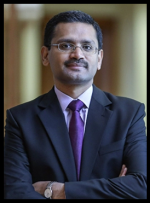
Rajesh Gopinathan was born in 1971. He is the CEO and Managing Director of Tata Consultancy Services (TCS), a worldwide IT administrations, counseling and business arrangements association. Rajesh is probably the most youthful chief in the Tata Group. He was raised to the part of Chief Executive in February 2017 subsequent to filling in as the Chief Financial Officer since 2013.
Rajesh Gopinathan was born into the world in Thrissur, Kerala. He lived in Lucknow till his twelfth class and concentrated in St. Mary's Convent Inter College, RDSO branch. His dad used to work for the Research Design and Standards Organization (RDSO) wing of the Indian Railways. Rajesh graduated in 1994 with an Electrical and Electronics Engineering certificate from the Regional Engineering College, Tiruchirappalli (presently National Institute of Technology, Tiruchirappalli).
In 1996, he got a post-graduate confirmation in Management (PGDM, equivalent to a MBA) from Indian Institute of Management Ahmedabad. He also won many awards. In 2021 - he win India's Best CEO in the classification of super huge organizations by Business Today (India). He joined the Tata Strategic Management Group in 1996, where he worked at numerous tasks with Tata organizations.

Rajnikant Shamalji Ajmera 'Rajnikant Ajmera’ (born 3 March 1953) is an industrialist based in Mumbai. He currently heads the US$ 450 million worth Ajmera Group having interests in realty, construction and related businesses.
He was born to late Shamlaji Ajmera and has many siblings, who are partners in Ajmera group. Apart from Ajmera group he is also heads the Shree Percoated Steels Limited. He was elected as the President of CREDAI (Confederation of Real Estate Developers Association of India), the apex body of real estate developers across India in April 2007 and also has been the President of Maharashtra Chamber of Housing Industry (MCHI).
Ajmera group was also in news when they jointly with Bakeri group purchased Ahmedabad's prestigious Calico Mill's property at government auction for Rs. 350 crores in 2010.
He also heads his family's charitable trusts and is trustee in several trusts belonging to BAPS Swaminarayan Sampraday. He is diploma holder in civil engineering.
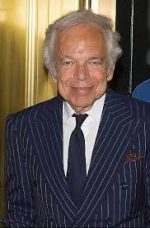
Ralph Lauren ( born ; October 1, 1939) is an American fashion designer, philanthropist, and business executive, best known for the Ralph Lauren Corporation clothing company, a global multi-billion-dollar enterprise. He has also become well known for his collection of rare automobiles, some of which have been displayed in museum exhibits. Lauren stepped down as Chief Executive Officer of the company in September 2015 but remains its Executive Chairman and Chief Creative Officer. As of January 2015, Forbes estimates his wealth at $8 billion, which makes Ralph Lauren the 155th richest person in the world.
Career:
He went to Baruch College where he studied business, although he dropped out after two years. From 1962 to 1964 he served in the United States Army and left to work briefly for Brooks Brothers as a sales assistant before leaving to become a salesman for a tie company. In 1966, when he was 26, he was inspired to design a wide, European-style necktie he had seen Douglas Fairbanks, Jr. wearing, but the idea was rejected by the company for which he worked as not being commercially viable. He left to establish his own company, working out of a drawer in the Empire State Building, taking rags and turning them into ties. He sold the ties to small shops in New York, with a major turning point when he was approached by Neiman Marcus, who bought 1,200.
In 1967, with the financial backing of Manhattan clothing manufacturer Norman Hilton, Lauren opened a necktie store where he also sold ties of his own design, under the label "Polo". He later received the rights to use the trademark Polo from Brooks Brothers; however, Brooks Brothers managed to retain its rights to the iconic "original polo button-down collar" shirt (still produced today), in spite of Lauren's Polo trademark. In 1971, he expanded his line and opened a Polo boutique on Rodeo Drive in Beverly Hills, California.
In 1970, Ralph Lauren won the Coty Award for his menswear line. Around that same time he released a line of women's suits that were tailored in a classic men's style. This was the first time the Polo emblem was seen, displayed on the cuff of the suit. Ralph Lauren released Polo's famous short sleeve pique shirt with the Polo logo in 1972 and unveiled his first Ralph Lauren collection for women.It came out in 24 colors and soon became a classic.He also gained recognition for his design after he was contracted to provide clothing styles for the movie The Great Gatsby as well as for Diane Keaton's title character in the 1977 feature film Annie Hall.
In 1984, he transformed the Gertrude Rhinelander Waldo House, former home of the photographer Edgar de Evia and Robert Denning, into the flagship store for Polo Ralph Lauren. This same year de Evia photographed the cover feature story for House & Garden on the Lauren home Round Hill in Jamaica,which had formerly been the home of Babe and Bill Paley.On June 11, 1997, Ralph Lauren Corporation became a public company, traded on the New York Stock Exchange under the symbol RL.
By 2007 Ralph Lauren had over 35 boutiques in the United States; 23 locations carried the Ralph Lauren Purple Label, including Atlanta, Beverly Hills, Boston, Charlotte, Washington, D.C., Chicago, Costa Mesa, Dallas, Denver, Honolulu, Houston, Las Vegas, Manhasset, New York, Palm Beach, Palo Alto, Philadelphia, Phoenix, San Diego, Short Hills, Montreal and Troy. The Financial Times reported in January 2010 that the firm had revenues of $5 billion for fiscal year 2009.
On September 29, 2015, Ralph Lauren announced that he would be stepping down as Chief Executive, to be replaced by Stefan Larsson, the President of Gap's Old Navy chain.
Awards and honors:
In 2010, Lauren was declared Chevalier de la Legion d'honneur by French President Nicolas Sarkozy in Paris.
In 2014, Lauren was awarded the James Smithson Bicentennial Medal.
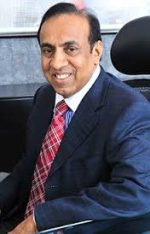
B. Ravi Pillai (born 2 September 1953) is an Indian entrepreneur and the head of RP Group of companies. A recipient of the 2008 Pravasi Bharatiya Samman,Pillai was honored again by the Government of India, in 2010, with the fourth highest Indian civilian award of Padma Shri.
Career:
During his time at Cochin University, he launched his first business, a chit fund in Kollam on reportedly borrowed money. Later, he started engineering contract business and worked for some of the major industrial houses in Kerala such as Fertilisers and Chemicals Travancore Limited, Hindustan Newsprint Limited, and Cochin Refineries. However, a labour strike forced him to close down his business after which he went to Saudi Arabia in 1978 where he started a small trading business. Two years later, he moved to construction business and established Nasser Al Hajri Corporation with 150 employees, which has over the years grown to become the flagship company of his business group, R. P Group, which is known to employ over 70,000 employees across its businesses.The shopping mall in South Kerala, RP Mall at Kollam city is owned by Ravi Pillai.
Pillai has expanded his business to other countries such as United Arab Emirates, Qatar, Bahrain and India and has interests in construction, hospitality, steel, cement, and oil and gas industries. RP Group is known to hold stakes in hotels such as Leela Kovalam, Hotel Raviz, Kollam, and WelcomHotel Raviz Kadavu,Kozhikode in his home state of Kerala. He is also involved in health care business through Upasana Hospital and Research Centre, a 300 bed multispecialty hospital in Kollam.
Awards and recognition:
Ravi Pillai, who holds a doctoral degree (Honoris Causa) from the Excelsior College, New York, was awarded the Pravasi Bharatiya Samman by the Government of India in 2008. Three years later, in 2010, the Government of India included him in the Republic Day honours list for the civilian honour of Padma Shri.
Forbes listed him, in 2014, in the The World's Billionaires at 988 in the world and 30 in India. Arabian Business ranked him as the fourth most powerful Indian in the Middle East in 2014.
Personal life:
Ravi Pillai is married to Smt.Geetha. He has two children; son Ganesh Ravi Pillai and daughter Arathi Ravi Pillai.
Recently, Ravi Pillai conducted his daughter's Dr. Arthi wedding in Kollam on Nov 26 2015, with total expense of US$ 9Million. The wedding was organized by the production designer who lent his capabilities to the blockbuster film, Bahubali. This was supposed to be one of the most expensive wedding that happened in Ashramom grounds in Kollam, Kerala.
Ravikant Nand Kishore Ruia (born 1949) is the vice-chairman of Essar Group, co-founded in 1969 with his brother Shashi Ruia.
In 2012, Forbes named the Ruia brothers as the world's richest Indians with a net worth of US$7 billion.
Ravi Ruia is a mechanical engineer by profession, with a degree from College of Engineering, Guindy in Chennai, and has played an important role in steering the Essar Group to its pre-eminent position. The [Essar Group] is a multinational conglomerate and a leading player in the sectors of steel, oil and gas, power, communications, shipping, ports and logistics, projects and minerals. With operations in more than 20 countries across five continents, the group employs 75,000 people, with revenues of US$17 billion. He was the 12th richest person living in the UK, as in the Sunday Times Rich List 2011.
In December 2011, Ruia was charged by India’s Central Bureau of Investigation over alleged corruption involving the sale of India's 2G spectrum. He was charged alongside two other executives from the Essar Group.
In April 2013 he was awarded the Outstanding Contribution to Sustainability award at The Asian Awards in London.
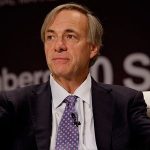
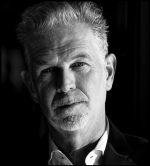
Wilmot Reed Hastings Jr. was born in 8th October, 1960 in Boston, Massachusetts. His dad Wilmot Reed Hastings was a lawyer for the Department of Health, Education and Welfare in the Nixon organization, and his mom Joan Amory Loomis was a Boston debutante from a Social Register family who was repelled by the universe of high society and encouraged her youngsters to scorn it. His maternal great grand dad was Alfred Lee Loomis. He is an American finance businessman. He is the fellow benefactor, administrator, and co (CEO) of Netflix, and sits on various sheets and non-benefit associations. A previous individual from the California State Board of Education, Hastings is a promoter for instruction change through contract schools.
Hastings lives in Santa Cruz, California. He is wedded to Patricia Ann Quillin, and he has two youngsters. Hastings went to Buckingham Browne and Nichols School in Cambridge, Massachusetts, and sold vacuum cleaners house to house in a hole year prior to entering school. He moved on from Bowdoin College with a Bachelor of Arts degree in Mathematics, which he found "excellent and locks in". He showed up in a first page article in USA Today in 1995, presenting on his Porsche. He thinks about that youthful now and has said that on the off chance that he at any point shows up on the first page of USA Today again it will "not [be] on the hood of a Porsche, yet I would [pose] with a lot of motion pictures". Hastings sold his Porsche for a Toyota Avalon, however now drives a Tesla. In 2018, Hastings showed up in a podcast series by Linkedin prime supporter Reid Hoffman, Masters of Scale, and talked about the procedure received by Netflix to scale.
Hastings' first occupation job was at Adaptive Technology, where he made a device for troubleshooting software. He met Audrey MacLean in 1990 when she was CEO at Adaptive Corp. In 2007, Hastings said that "From her, I took in the worth of core interest. I learned it is smarter to do one item well than two items in a fair manner." Hastings left Adaptive Technology in 1991 to establish the foundation to his first organization, Pure Software, which created items to investigate programming. In 1996, Pure Software reported a consolidation with Atria Software. The consolidation coordinated Pure Software's projects for identifying bugs in programming with Atria's devices to oversee improvement of complex programming. In 1997, the joined organization, Pure Atria, was obtained by Rational Software, which set off a 42% drop in the two organizations' stocks after the arrangement was announced. Hastings was delegated Chief Technical Officer of the consolidated organizations. After Pure Software, Hastings went through two years considering how to stay away from comparative issues at his next startup. In 1997, Hastings and previous Pure Software representative Marc Randolph helped to establish Netflix, offering level rate film rental-via mail to clients in the US by joining two arising advancements; DVDs, which were a lot simpler to send as mail than VHS-tapes, and a site to arrange them from, rather than a paper index. Hastings said that when he founded Netflix, he had no idea whether customers would use the service.
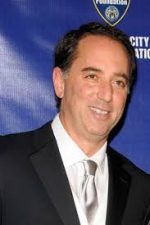
Richard B. "Rich" Handler (born May 23, 1961) is an American businessman, currently serving as the Chairman of the Board and CEO of Jefferies Group, where he is the longest-tenured CEO on Wall Street.Handler also serves as the CEO and director of Leucadia.
Early life and education:
Handler grew up in New Jersey, graduating in 1979 from Pascack Hills High School in Montvale.Handler received a BA in economics from the University of Rochester in 1983 and an MBA from Stanford University in 1987. Before graduate school, he worked as an investment banker at First Boston, and after as a junk bond trader for Michael Milken at Drexel Burnham Lambert.
Professional career:
Handler joined Jefferies in April 1990 as a salesman and traderand was appointed CEO on January 1, 2001,Chairman in 2002.During his time at Jefferies, between 1990 and 2012, shares compounded annually at 22%.On November 12, 2012, Jefferies announced its merger with Leucadia, its largest shareholder. At that time, Leucadia common shares were trading at $21.14 per share. As of December 31, 2015, Leucadia shares were trading at $17.39 per share.In March 2013, Jefferies merged with Leucadia,and Handler became CEO of both companies.
In April 2012, Handler and Chairman of the Jefferies Executive Committee Brian Friedman formed the Jefferies Global Senior Advisory Board, which now includes James D. Robinson III, Lord Hollick, Michael Goldstein, Bernard Bourigeaud, Dennis Archer, Sir David Reid,Gilles Pélisson, and G. Richard Wagoner. In August 2012, Handler played a lead role in saving Knight Capital Group after they suffered a $440 million loss due to a 'technology glitch.' Together with Brian Friedman, Handler structured and led the rescue,which included making Jefferies the largest shareholder with an investment of $125 million.
In November 2011, ratings company Egan-Jones issued a negative report regarding Jefferies that caused a 20% decline in the Jefferies stock price minutes after the opening bell the following morning.This report was found to contain a number of inaccuracies: Jefferies was accused of having 77% of its shareholder’s equity tied up in the same illiquid sovereign debt securities that had just toppled MF Global, neglecting to mention that the position had been hedged, supposedly offsetting exposure.Chris Kotowski of Oppenheimer & Co. made public statements pointing out additional figures in the Egan-Jones report that were 'so grotesquely wrong they should immediately jump off the page to anyone remotely familiar with the numbers.' This included the false claim that Jefferies revenue had declined 37.8% annually over the previous ‘couple of years.’ In fact, Jefferies net revenues actually increased by 154% from 2008 to 2011 according to company filings, The Egan-Jones report was described by Kotowski in his research report from November 23, 2011 titled "Another Hack Attack" as 'flat out wrong',and was followed by what Richard Handler characterized as a multi-week public attack on Jefferies by Sean Egan.Handler and the Jefferies management team responded with unprecedented immediacy and transparency, collapsing 75% of this sovereign debt position in a matter of days to prove the bonds were hedged and highly liquid, sharply reducing the rest of Jefferies balance sheet, and publicly addressing the accusations on an almost daily basis.This aggressive and unconventional response resulted in an eventual rebound in Jefferies share price from the November lows.
Richard Handler is also Chairman and CEO of the Handler Family Foundation and serves on the Advisory Council of the Stanford University School of Business.For the University of Rochester, Handler serves on the Board of Trustees,as Chairman of the Finance Committee, and as Co-Chairman of the university's Capital Campaign. Handler has donated $25 million for the Jane and Alan Handler Scholarship Fund (named for Handler's parents) for exceptional students from underprivileged backgrounds with the potential for future leadership.
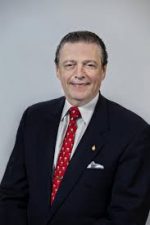
Richard L. Carrión Rexach (born November 26, 1952) is the current Chairman and CEO of Popular, Inc., parent company of Banco Popular de Puerto Rico, Banco Popular North America and E-Loan.
Early life:
Carrión was born and raised in Puerto Rico. His grandfather was one of the founders of Popular, Inc. (BPPR). He received a bachelor's degree from the Wharton School of Finance and Commerce in 1974 and an MS in Management Information Systems from the MIT Sloan School of Management in 1976.After the master's degree, Mr. Carrión joined Banco Popular in 1976. After his father's death, Carrión became the leader of that banking corporation.
Popular, Inc.
Richard L. Carrión is the Chief Executive Officer and Chairman of the Board of Popular, Inc., a publicly traded financial holding company with more than $45 billion in consolidated assets. Today, Banco Popular, a wholly owned subsidiary of Popular, Inc., is Puerto Rico's leading depository institution, the largest Hispanic-owned bank in North America, and one of the 30 most important financial institutions in the Americas. As CEO, Carrión has led the way through numerous innovations in the company such as its expansion through the Caribbean, Latin America and the United States.
While Mr. Carrión was President of Banco Popular, Popular completed the acquisition of various financial institutions, including Banco de Ponce, Banco Roig, Seminole Bank, First State Bank of Southern California, Gore Bronson Bancorp in Chicago and Aurora National Bank. At the time of the acquisition, Banco de Ponce was the second largest bank in Puerto Rico. Recently, he also headed Popular’s recent acquisition of Quaker City, a savings and loan holding company for Quaker City Bank, based in Whittier, California, and Kislak National Bank, a Florida-based commercial bank.
In the information technology arena, Carrión’s vision brought the first network of ATMs to Puerto Rico and many other Latin American countries, and also spearheaded the successful migration from paper to electronic transactions. In 1999, after the acquisition of GM Group, Inc., the largest data processing center in the Caribbean, Popular consolidated its leadership role in the technological arena, thus creating EVERTEC, a new leader in information technology.
As of May 24, 2010, Popular Inc.'s board of directors announced that David Chafey, Jr., president and chief operating office would no longer be employed by the company. The board appointed Chairman and Chief Executive Richard Carrión as President. The company added that the position of Chief Operating Officer would not be filled at this time.
Philanthropy:
For almost three decades Mr. Carrión has divided his time between Popular and philanthropy, placing particular emphasis on education and sports. He is the founder and trustee of the Banco Popular Foundation; which, among other charities, has donated scholarships to over 1,000 students through the Rafael Carrión, Jr. Scholarship Fund. He currently served on the board of directors of the Puerto Rico Telephone Company and Verizon. Since 1992, Carrión has also been involved in the production of music videos that highlight Puerto Rico's musical culture and history. In 2007, he was appointed a member of the International Basketball Federation (FIBA) Finance Commission.
Mr. Carrión has also contributed to improving Puerto Rico's public education system. He participated in Sapientis Week, an initiative sponsored by the non-profit Sapientis which brings distinguished public figures into classrooms in order to raise the public's awareness of the education crisis in Puerto Rico.
International Olympic Committe:
He has been a member of the International Olympic Committee (IOC) since 1990 and currently chairs the Finance Commission and is a member of the IOC’s Marketing, TV and Internet Rights Commissions. Mr. Carrión led the negotiation team for the U.S. broadcast of the 2010 and 2012 Olympic Games - generating $2 billion in revenue - and was elected to the IOC Executive Board in 2004. He was one of the torch carriers for the 2006 Winter Olympics in Torino, Italy.
From 1987, he and the Puerto Rico Olympic Committee led a fight to try to bring the 2004 Summer Olympic Games to San Juan. That bid failed, however, when Athens was voted in 1997 as the city to host those games.
In 2012, Carrión awarded Javier Culson with the bronze medal for the 400 m hurdles and Jaime Espinal with the silver medal for wrestling freestyle 84 kg at the 2012 Olympics. Culson and Espinal were the first Puerto Ricans to win Olympic medals outside of boxing.
Candidacy for IOC President:
On May 22, 2013 Richard Carrión confirmed that he would run for President of the IOC. At the 125th IOC Session in Buenos Aires, Carrión secured 29 votes in the final round of voting, but lost the election to Thomas Bach.