S

Sunil Mittal
Business Name
Name Initial
Long Business Description

Sunil Bharti Mittal (born 23 October 1957) is an Indian entrepreneur, philanthropist and the founder, chairman and Group CEO of Bharti Enterprises, which has interests in telecom, retail, financial services, and agri business. The Group flagship Bharti Airtel, with operations in 20 countries across Asia and Africa and a customer base of over 275 million, is India's largest telecom company and world's third largest mobile operator. Bharti Airtel clocked revenues of over USD 14.5 billion in FY2013. He is listed as the 8th Richest person in India by Forbes with a Net worth of $7 Billion.

In 2007, he was awarded the Padma Bhushan, India's third highest civilian honor. On 1 July 2013 he was elected Vice-Chairman of the International Chamber of Commerce Entrepreneurial ventures.

A first generation entrepreneur, Mittal started his first business in April 1976 at the age of 18, with a capital investment of ₹20,000 (US$300) borrowed from his father. His first business was to make crankshafts for local bicycle manufacturers.

In 1980, he along with his brothers Rakesh, Rajan started an Import Enterprise named Bharti Overseas Trading Company. He sold his bicycle parts and yarn factories and moved to Mumbai. In 1981, he purchased importing licences from exporting companies in Punjab.[11] He then imported thousands of Suzuki Motors's portable electric-power generators from Japan. The importing of generators was suddenly banned by the then Indian Government.

In 1984, he started assembling push-button phones in India,[11] which he earlier used to import from a Taiwan company, Kingtel, replacing the old fashioned, bulky rotary phones that were in use in the country then. Bharti Telecom Limited (BTL) was incorporated and entered into a technical tie up with Siemens AG of Germany for manufacture of electronic push button phones. By the early 1990s, Mittal was making fax machines, cordless phones and other telecom gear. Mittal says, "In 1983, the government imposed a ban on the import of gensets. I was out of business overnight. Everything I was doing came to a screeching halt. I was in trouble. The question then was: what should I do next? Then, opportunity came calling. While in Taiwan, I noticed the popularity of the push-button phone -- something which India hadn't seen then. We were still using those rotary dials with no speed dials or redials. I sensed my chance and embraced the telecom business. I started marketing telephones, answering/fax machines under the brand name Beetel and the company picked up really fast.". He named his first push-button phones as 'Mitbrau'.

In 1992, he successfully bid for one of the four mobile phone network licences auctioned in India. One of the conditions for the Delhi cellular license was that the bidder have some experience as a telecom operator. So, Mittal clinched a deal with the French telecom group Vivendi. He was one of the first Indian entrepreneurs to identify the mobile telecom business as a major growth area. His plans were finally approved by the Government in 1994 and he launched services in Delhi in 1995, when Bharti Cellular Limited (BCL) was formed to offer cellular services under the brand name AirTel. Within a few years Bharti became the first telecom company to cross the 2-million mobile subscriber mark. Bharti also brought down the STD/ISD cellular rates in India under brand name 'Indiaone'.

In May 2008, it emerged that Sunil Bharti Mittal was exploring the possibility of buying the MTN Group, a South Africa-based telecommunications company with coverage in 21 countries in Africa and the Middle East. The Financial Times reported that Bharti was considering offering US$45 billion for a 100% stake in MTN, which would be the largest overseas acquisition ever by an Indian firm. However, both sides emphasize the tentative nature of the talks, while The Economist magazine noted, "If anything, Bharti would be marrying up," as MTN has more subscribers, higher revenues and broader geographic coverage. However, the talks fell apart as MTN group tried to reverse the negotiations by making Bharti almost a subsidiary of the new company. In May 2009, Bharti Airtel again confirmed that it was in talks with MTN and the companies agreed to discuss the potential transaction exclusively by 31 July 2009. Talks eventually ended without agreement, some sources stating that this was due to opposition from the South African government.

In June 2010, Bhartil led by Mittal acquired the African business of Zain Telecom for $10.7 billion making it the largest ever acquisition by an Indian telecom firm.In 2012, Bharti tied up with Wal-Mart, the US retail giant, to start a number of retail stores across India. In 2014, Bharti planned to acquire Loop Mobile for INR 700 crores, but the deal was called off later.

Awards and recognition:
Padma Bhushan, Government of India, 2007
Transforming India Leader,NDTV Business Leader Awards
GSMA Chairman's Award
Asia Businessman of the Year, Fortune Magazine, 2006
Telecom Person of the Year, Voice & Data, 2006
CEO of the year, Frost and Sullivan Asia Pacific ICT awards, 2006
Best Asian Telecom CEO, Telecom Asia Awards, 2005
Best C.E.O, India, Institutional Investor, 2005
Business Leader Of The Year, Economic Times, 2005
Philanthropist of the Year Award, The Asian Awards, 2010
INSEAD Business Leader Award, 2011
Honoris Causa Doctorate of Sciences (D.Sc.) Degree, Amity University Gurgaon, 2016

Sunny Varkey
Business Name
Name Initial
Long Business Description

Born           :        1957
Kerala, India
Residence   :        Dubai
Occupation :       Entrepreneur,education philanthropist
Known for  :      GEMS Education,Varkey Foundation
Children     :      Dino Varkey
Jay Varkey

Sunny Varkey (born in 1957 in Kerala, India) is a non-resident Indian, Dubai-based education entrepreneur and education philanthropist. He is the founder and chairman of the global advisory and educational management firm GEMS Education, which is the largest operator of private kindergarten-to-grade-12 schools in the world, with a network of over 130 schools in over a dozen countries. He is also the chairman of the umbrella business organisation the Varkey Group, and the founder and trustee of the philanthropic Varkey Foundation. As of 2012, Varkey is also a UNESCO Goodwill Ambassador.

Varkey Foundation:

Varkey's strong spiritual values, and the example of his father, gave him a passion for philanthropy. In December 2010, he consolidated and structured his various donations and charitable initiatives by creating the Varkey Foundation (initially the Varkey GEMS Foundation) as the philanthropic arm of GEMS. The foundation intends to impact 100 impoverished children for every child enrolled at GEMS schools, via enrolment and education-access initiatives, worldwide teacher training programs, advocacy campaigns, and physical projects such as building classrooms, schools, and learning centres. Bill Clinton launched the foundation. Argentine president Mauricio Macri met with Varkey (third from left) at the World Economic Forum in 2016.

In March 2011, the foundation partnered with UNESCO for girls' education in Lesotho and Kenya, and donated $1,000,000 to the effort. In September 2011, a further $1 million was pledged with UNESCO to train 10,000 school principals in India, Ghana, and Kenya. In 2014, the foundation's Teacher Training Programme committed to train 250,000 teachers within 10 years in under-served communities across the world.

In 2013, the Varkey Foundation helped launch the annual Global Education and Skills Forum, in partnership with UNESCO and the U.A.E. Ministry of Education. Bill Clinton gave the inaugural keynote address. Varkey hopes the annual forum will become the "Davos of education".At the second annual forum in March 2014, Varkey announced the Global Teacher Prize, a $1 million award to an exceptional teacher who has made an outstanding contribution to the profession, to be presented at the third annual GESF in 2015.

Varkey Group:

Varkey Group is the umbrella organisation covering GEMS Education and Varkey's other businesses, including healthcare and, previously, construction. Varkey founded the company in 1979, and it is based in Dubai, with additional offices in the UK, U.S., and India.

In 1984 Varkey founded Welcare, a healthcare consultancy and management venture which developed a number of hospitals and clinics. A controlling interest in Emirates Healthcare, the Varkey Group's umbrella company which held Welcare, was purchased by Mediclinic International in 2012. The sale of his healthcare sector allowed Varkey to focus on education and educational philanthropy.

Honors:

Global Indian Business Award (2007)
CEO Middle East Award – Corporate Social Responsibility (2007)
Outstanding Asian Businessman of the Year (2007)
Rajiv Gandhi Award for Eminent Educationist (2008)
Padma Shri Award (2009)
Honorary Order – Public Recognition award from the Government of Russia (2011)
Middle East Excellence CEO of the Year – Knowledge Development and Education Partnership (2012)
UNESCO Goodwill Ambassador (2012)
Education Business Leader of the Year,
Gulf Business Industry Awards (2012)
Honorary Doctorate, Heriot-Watt University

Susanne Klatten
Business Name
Name Initial
Long Business Description

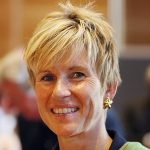
She is the majority owner of Altana, a chemical manufacturer based in Germany. She also has substantial shares in BMW. Most of her wealth has been inherited from her father.
Susan Wojcicki
Business Name
Name Initial
Long Business Description

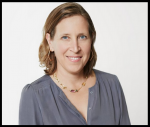
Susan Diane Wojcicki was born into the world in July 5, 1968 to Esther Wojcicki, an instructor of Jewish plummet, and Stanley Wojcicki, a Polish American material science educator at Stanford University. He is an American-Polish business chief who fills in as the CEO of YouTube. She has been in the tech business for more than 20 years. Wojcicki was associated with the establishing of Google, and turned into Google's first promoting supervisor in 1999. She later drove the organization's web based publicizing business and was placed responsible for Google's unique video administration. In the wake of noticing the accomplishment of YouTube, Wojcicki proposed the procurement of YouTube by Google in 2006, and has filled in as CEO of YouTube since 2014. Wojcicki has an expected total assets of $580 million.

She has two sisters: Janet Wojcicki, (PhD, anthropologist and disease transmission specialist) and Anne Wojcicki, organizer of 23andMe. She experienced childhood with the Stanford grounds with George Dantzig as a neighbor. She went to Gunn High School in Palo Alto, California, and composed for the school paper.

Wojcicki's first business was selling "zest ropes" house to house at age 11. A humanities major in school, she took her first software engineering class as a senior. Wojcicki wedded Dennis Troper on August 23, 1998, in Belmont, California. They have five kids. On December 16, 2014, in front of taking her fifth maternity leave, Wojcicki composed an opinion piece in The Wall Street Journal about the significance of paid maternity leave. She is frequently cited discussing the significance of discovering balance among family and profession.

Notwithstanding her U.S. citizenship, she is a Polish resident. Her granddad, Franciszek Wójcicki, was a People's Party and Polish People's Party government official who had been chosen MP during the 1947 Polish authoritative political decision. Her grandma, Janina Wójcicka Hoskins, was a Polish-American bookkeeper at the Library of Congress, answerable for building the biggest assortment of Polish material in the United States.

In September 1998, that very month that Google was consolidated, its authors Larry Page and Sergey Brin set up office in Wojcicki's carport in Menlo Park. Prior to turning into Google's first advertising administrator in 1999, Wojcicki worked in showcasing at Intel Corporation in Santa Clara, California, and was an administration specialist at Bain and Company and R.B. Webber and Company. At Google, she dealt with the underlying viral promoting programs, just as the principal Google Doodles.

In 2003, Wojcicki helped lead the improvement of one of Google's fundamental publicizing items—AdSense. She filled in as its first item supervisor, and for her endeavors, was granted the Google Founders' Award. She rose to turn into Google's senior VP of Advertising and Commerce, and directed the organization's promoting and insightful items, including AdWords, AdSense, DoubleClick, and Google Analytics.

YouTube, then, at that point a little beginning up, was effectively rivaling's Google Video administration, managed by Wojcicki. Her reaction was to propose the acquisition of YouTube.

She dealt with two of Google's biggest acquisitions — the $1.65 billion acquisition of YouTube in 2006 and the $3.1 billion acquisition of DoubleClick in 2007.

In February 2014, Wojcicki turned into the CEO of YouTube. She was classified "the main individual in publicizing," just as named one of Time's 100 most persuasive individuals in 2015and depicted in a later issue of Time as "the most influential lady on the Internet."

In the time that Wojcicki has been CEO of YouTube, the organization declared that it had arrived at 2 billion signed in clients a month and that clients were watching one billion hours per day. There are limited renditions of YouTube in 100 nations all throughout the planet across 80 dialects. Since assuming the job of CEO, YouTube's level of female representatives has ascended from 24 to almost 30%.
Business Tags
Syed B. Ali
Business Name
Name Initial
Long Business Description

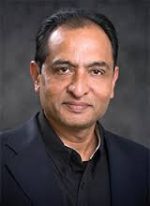
Syed Basharat Ali, usually referred to as Syed Ali, is the founding chairman, president, and CEO of Cavium Networks, a San Jose, California-based company specializing in MIPS-based network and security processors. Cavium Networks develops and manufactures processor architectures and cores for digital consumer, networking, personal entertainment, communications and business applications.

He received a BSEE from Osmania University, in Hyderabad, India and an MSEE from the University of Michigan.

Career:

Mr. Ali worked at Samsung Electronics, SGS-Thompson, Tandem Computers, and American Microsystems Inc. (now part of ON Semiconductor) before becoming part of the founding management team at Malleable Technologies, which was acquired by PMC Sierra in 2000.

In 2000, Mr. Ali founded Cavium Networks. On May 1, 2007 Cavium had its IPO, and grew to have a market capitalization of 1.3 billion US dollars  in the first week of October 2007.

Awards:

Syed B. Ali received the Ernst & Young Entrepreneur of the Year Award in 2008 and was a national finalist for the award in 2011. The Ernst & Young Entrepreneur Of The Year© award is the world’s most prestigious business award for entrepreneurs, spanning more than 140 cities and 50 countries worldwide.