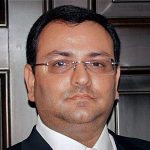
He is the richest person in Ireland. He is of Indian ancestry who chairs the Shapoorji Pallonji Group, a construction firm responsible for Mumbai’s biggest buildings. He has an 18.4 percent stake with the Tata Group, the company that owns Jaguar, Land Rover and Tetley Tea. He got his Irish passport in the early 2000s.
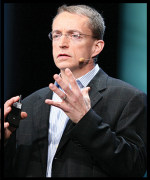
Patrick Paul Gelsinger was born into the world in 1961. He was experienced childhood with a homestead in an Amish part of Pennsylvania. He is an American business leader and specialist, at current filling in as CEO of Intel.
Gelsinger is situated in Silicon Valley since the last part of the 1970s and moved on from Stanford University with a graduate degree in science. He recently filled in as CEO of VMware for a very long time and as president and head working official at EMC for a very long time before that, moving from Intel where he had worked for over thirty years. At Intel, he planned the engineering for the Intel 80486 processor during the 1980s, filled in as its first CTO just as a senior VP and head supervisor of its Digital Enterprise Group prior to leaving subsequent to working there for more than three decades. He returned at Intel in mid 2021 to fill in as its CEO.
Gelsinger After secondary school, he joined in and acquired a partner's certificate from a little Lincoln Tech a little professional school in West Orange, New Jersey. He then, at that point started working at Intel in 1979, at age 18. While at Intel, he acquired a four year college education in electrical designing at Santa Clara University in 1983, and a graduate degree from Stanford University in 1985. Gelsinger is a rehearsing Christian. In 2013, Gelsinger helped to establish Transforming the Bay with Christ (TBC), an alliance of business pioneers, investors, non-benefit pioneers and ministers expecting to change over 1,000,000 individuals over the course of the following decade. Gelsinger began working at Intel as a quality-control technician in 1979.[5] He was one of the design engineers of the 1985 Intel 80386 processor,[1] and the architect of the 80486 processor, introduced in 1989.[3] In 1992, he was named vice president of the Intel Products Group and general manager of the Personal Computer Enhancement Division in the Business Communications Division. In 1996, he became general manager of Intel's Desktop Items Group. In 2001, he was named Intel's first boss innovation officer. As CTO he dispatched the Intel Developer Forum gathering as a partner to Microsoft's WinHEC. In 2005, he became senior VP and head supervisor of Intel's Digital Enterprise Group.
In September 2009, Gelsinger left Intel to join EMC as president and head working officer. In 2012, he was named CEO of VMware. In late 2013, some industry investigators named Gelsinger as a potential replacement to Steve Ballmer as CEO of Microsoft. Intel reported the arrangement of Gelsinger as their new CEO on January 13, 2021, successful February 15. A letter sent from investor and extremist financial backer Dan Loeb of Third Point Management to the board approaching Intel to employ a speculation counselor to recover the organization's slacking piece of the pie preceded Gelsinger's return. In May 2021, Gelsinger was met by Lesley Stahl of an hour. Gelsinger expressed that Intel plans to find the Taiwanese chip producer TSMC. He likewise reported a redesign of a fab in New Mexico.
Pekka Lundmark was born into the world in 9th December 1963 in Espoo, Finland. He moved on from the Helsinki University of Technology with a Master of Science certification in applied physical science in 1988. He is a Finnish business leader and current President and CEO of Nokia. Beforehand, he had filled in as CEO of Fortum, a Finnish state-claimed energy organization, from 2015 to July 2020. Lundmark is hitched, and he has three kids.
Lundmark started his vocation with Nokia in 1990, where he stood firm on different chief situations. He left Nokia in 2000, and joined Startupfactory Oy as an overseeing accomplice from 2000 to 2002, trailed by a stretch as President and CEO of Hackman, a Finnish cutlery and cookware organization, from 2002 to 2004. Lundmark then, at that point joined Konecranes, a Finnish organization work in lifting gear, as the Group Executive Vice President in 2004, and turned into the President and CEO of the organization in 2005, serving until 2015, when he joined Fortum as the President and CEO. On 2 March 2020, Nokia's Board of Directors declared that Lundmark would be the new President and Chief Executive Officer of Nokia. Lundmark was required to leave Fortum on August 31, 2020, and join Nokia on 1 September 2020. He succeeded Rajeev Suri, who had filled in as President and CEO of Nokia since 2014. Suri will stay as a counselor on the board for the principal year subsequent to venturing down. Nokia applauded Lundmark's record at Fortum, saying that he had "reliably conveyed powerful all out investor returns, effectively recharged the organization's methodology, and situated it's anything but a solid part in the changing worldwide energy area." In June, it was reported that Lundmark would join Nokia on 1 August 2020, one month sooner than arranged. The declaration came after Fortum said its Chief Financial Officer, Markus Rauramo, would be taking over as Fortum's CEO from 1 July.

He is the Managing Director of Marine Service GmbH, a shipping engineering and consultancy office. He is known for criticizing Bill Gates’ move for billionaires to give away a large percentage of their wealth to charity. Instead, Kramer has called for higher taxes so that the government can do its job of helping the people better.
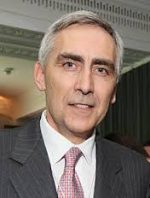
Peter Löscher (born 17 September 1957 in Villach, Austria) is an Austrian manager and former president, Global Human Health at global pharmaceutical company Merck & Co. He was appointed chief executive officer (CEO) of Siemens AG on 20 May 2007 as the successor of Klaus Kleinfeld, and was selected to take on the new position on 1 July 2007. He was the first top executive in the 160-year history of Siemens to be hired from outside the company.
Education:
Peter Löscher graduated from Gymnasium Villach/Austria in 1978 and got a master's degree at the Vienna University of Economics and Business Administration. Later he attended but did not obtain a degree from an MBA program at the Chinese University of Hong Kong and the Advanced Management Program (AMP) at Harvard University. In 2007 he received the honorary degree of Doctor of Engineering from Michigan State University.
Professional career:
From 1988 until 2000 he worked for the German pharmaceutical company Hoechst in Spain, Japan, Great Britain and the United States. After Hoechst merged with Rhone-Poulenc he stayed at Aventis until 2002. He then joined Amersham, which was taken over by General Electric. In 2006 he became a member of the executive board of the US pharmaceutical company Merck.
Löscher became the first CEO of Siemens AG to be appointed from outside the company in 2007. He was replaced by Joe Kaeser (Josef Käser) as CEO and left Siemens in July 2013.
Personal life:
Peter Löscher speaks German, English, French, Spanish, and Japanese. He and his Spanish-born wife have three children. According to an interview in the New York Times, Löscher was the captain of the volleyball team at high school and college.
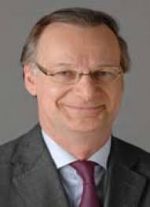
Pierre Nanterme (born 1959) is a French business executive. He is currently the chairman and CEO of Accenture.
Early life:
Pierre Nanterme was born in France in 1959. He attended the ESSEC Business School (École Supérieure des Sciences Économiques et Commerciales) in Paris and received his master's in management degree in 1981. After graduation, he went on to fulfill his military service in France.
Career at Accenture:
In 1983, after completing his military service, Nanterme began his career at the consulting firm Accenture (previously known as Andersen Consulting). Roles during his early career at the company included acting as head of the banking and finance practice in France.
Nanterme became a partner at the firm in 1993. Between 1993 and 2005, Nanterme held a number of roles in the firm’s financial services practice, including managing director for Europe, Africa, and Latin America, as well as global managing director of the insurance industry group.
In November 2005, Nanterme was appointed the country managing director for Accenture in France. The next year, he joined Accenture's global leadership team and became the company's chief leadership officer, managing its leadership development.
In 2007, Nanterme was appointed group chief executive of Accenture's global financial services operating group, which focuses on clients in banking, insurance, and capital markets. In October 2010, the company announced that Nanterme would serve as the next chief executive officer of Accenture, at which time he also became a member of the board of directors. He officially took office as CEO on January 1, 2011, and in February 2013 took on the additional role of chairman.
Other professional roles and awards:
Nanterme was involved with the Mouvement des Entreprises de France (MEDEF), the largest French employers' association, and served as president of the association's Commission for Economic Affairs and Public Finance from 2005 to 2013. He also served on MEDEF's executive board.
Between 2007 and 2011, Nanterme was chairman of the French consulting association SYNTEC, which has member companies from the engineering, information technology, research, and consulting sectors.
In 2010, Nanterme was awarded the insignia Chevalier of the Legion of Honour for his work as a French business leader.
Nanterme has served on a number of task forces for the B20 Summit, and was a member of the executive board of the B20 Green Growth Action Alliance, which was launched by the World Economic Forum to work on the growing need for private funding in sustainability. He has also co-chaired the Alliance's Energy Efficiency working group and served as a member of the Economic Policy working group.
In addition to the above roles, Nanterme has served on the steering board of the European Commission's European Cloud Partnership, which aims to encourage the public sector to use cloud computing services to create economic growth in Europe. He has also acted as a board member of the TransAtlantic Business Dialogue, a group of CEOs who form policies to encourage trade between Europe and America.
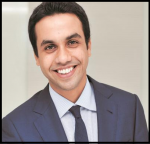
Pirojsha Adi Godrej is an Indian industrialist and businessman. He is the Executive Chairman of Godrej Properties Limited, the land improvement arm of the Godrej Group, of which his dad, Adi Godrej, is the administrator. Pirojsha Godrej moved on from the Wharton School of Business in 2002, and finished his Masters in International Affairs from Columbia University in 2004. He finished his tutoring from The Cathedral and John Connon School. Pirojsha's interests include cricket, food, governmental issues, chess and uncommon book gathering. He is wedded and he has a girl.
Pirojsha Godrej worked with Godrej Properties Limited from 2004 to 2006 during which time he was responsible for coordinating the organization's extension system, which saw the organization increment its activities from 2 urban areas to 10 urban communities somewhere in the range of 2004 and 2008. He proceeded to finish a MBA from Columbia Business School in 2008 preceding rejoining GPL as leader chief. In 2010, Pirojsha drove the first sale of stock (IPO) of the organization through which Godrej Properties brought US$100 million. Up in 2012, Pirojsha was named CEO of Godrej Properties. He has driven the organization through a period of quick development through which the organization has set up itself as one of India's quickest developing land designers. Under Pirojsha's authority, Godrej Properties has been focusing in on economical advancement movement; in 2013, GPL got an honor from previous President of India, APJ Abdul Kalam for being one of the organizations in India from across areas to have driven the green structure development. The Clinton Foundation has banded together with Godrej Properties for its huge municipality project, Godrej Garden City, which was chosen as one of two activities in India and seventeen from around the world to work with the Clinton Climate Initiative towards the objective of establishing a Climate Positive Development. In 2015, The Economic Times chosen him in their 40 under 40 rundown, a list of the most significant business pioneers under 40 years old.
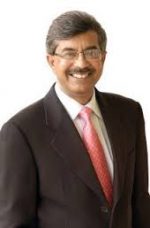
Pramod Bhasin stepped down as President and CEO of Genpact, India's largest business process outsourcing (BPO) company, becoming non-executive Vice Chairman in 2011.
Career:
Pramod is a British Chartered Accountant from McLintock & Co, London, and holds a Bachelor of Commerce degree from Shri Ram College of Commerce.
He became an officer of GE. His career with GE and RCA spanned 25 years across the US, Europe and Asia. He was the head of GE Capital in India and in Asia, having earlier worked with GE Capital's Corporate and Finance Group in Stamford, Connecticut, US.
Pramod started GE Capital International Services (GECIS) in 1997 as the in-house BPO division of General Electric (GE) when K.P. Singh convinced Jack Welch, the former CEO of GE, to outsource certain services to India at Gurgaon. Under Pramod GE hired Raman Roy, pioneered business process outsourcing in India, and expanded its operations from India to countries including China, Hungary, Guatemala, Poland, Mexico, Morocco, the Philippines, Romania, South Africa and the United States.
In 2007 the International Quality and Productivity Center at the Shared Services and Outsourcing Global Conclave named Genpact the Global Shared Services Leader of the Year and awarded Pramod Bhasin their Lifetime Contribution Award.
A consultant and advisor in the domain, Pramod Bhasin served as the Chairman of India's National Association of Software & Services Companies (NASSCOM) for the year 2009-10, and became a member of the Board of Trustees of NASSCOM Foundation. He is also currently serving as President at TiE Delhi-NCR.
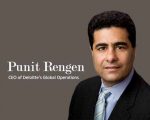
Punit Renjen is chief executive officer of Deloitte Global. Previously, he served as chairman of the board, Deloitte LLP (U.S.), and prior to that, chairman and CEO of Deloitte Consulting LLP.
Outside of Deloitte, Punit is a member of the boards of directors at United Way Worldwide, US-India Business Council, and Japan Society; and a member of the board of trustees for the US Council for International Business. He speaks regularly on research regarding the attributes of exceptional organizations, particularly the importance of a well-articulated and lived workplace culture of purpose.
Punit has held several leadership roles within Deloitte, including CEO of Deloitte Consulting LLP in the US member firm. During his tenure as US Consulting CEO, the US consulting practice experienced tremendous growth despite an ongoing recession, helping it to become one of the largest consulting organizations according to leading analysts’ rankings.
Punit was born and raised in India. He attended Willamette University in Oregon where he earned a master’s degree in management, and now serves on the board of trustees. In 2015, Punit was named among the 100 most influential business leaders who have graduated from schools accredited by the Association to Advance Collegiate Schools of Business International. He is married and has a son.
"Confidence — it fuels business investments, innovation, and long-term growth. However, the current climate of uncertainty has greatly diminished that confidence slowing economic recovery."
Building business confidence; driving growth
For the past three years, Renjen has commissioned the Deloitte Core Beliefs & Culture Survey. The 2014 survey found that focusing on purpose rather than profits builds business confidence and drives investment. This is a critical finding — and underscores the significant impact a “culture of purpose” can play in fostering a thriving community.
An array of key indicators shows an economy of fits and starts. Everything from hiring to business inventories is up one month and down the next. As a result, many businesses continue to sit on excess capital rather than put it to productive use. But not all businesses. Those committed to creating meaningful impact for all stakeholders (including clients, employees, and communities) foster strong cultures of purpose. This sense of purpose inspires confidence among leaders and stakeholders alike — and can lead to a competitive advantage in a time of economic volatility.